Collaborating Through the Language of Food
Published in April 2018.
The language of food echoes through the generations in rural Zambia. Many of the people with whom I've worked — men and women from different tribes in the south, the east, the west — repeat stories, or recall memories, about growing or cooking or foraging or preserving wild and indigenous food while growing up in a village far from any urban centre.
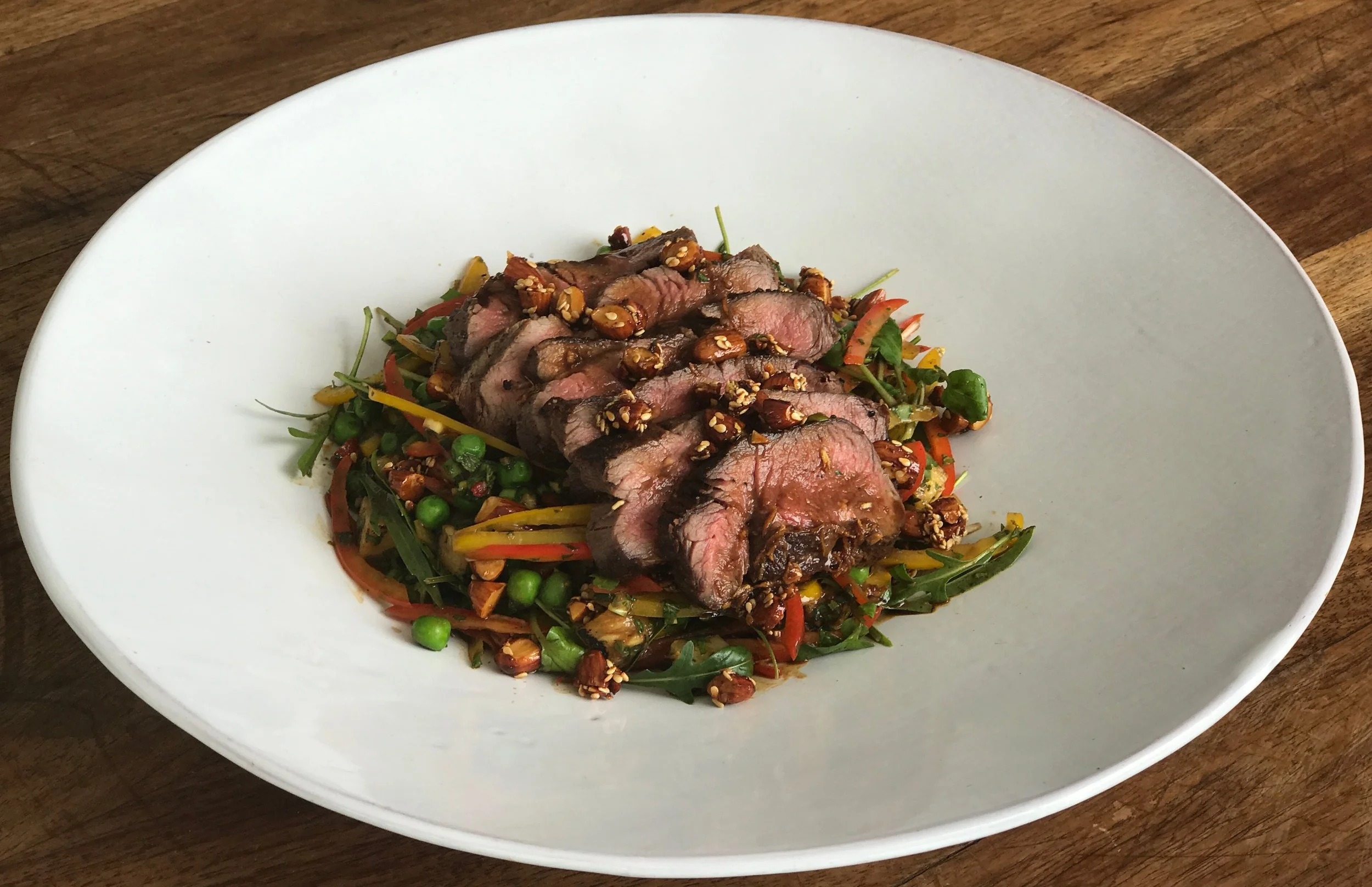
What triggers a memory for them today is being reintroduced to these ingredients through my bush gourmet cuisine. Be it a government minister or a new porter in a kitchen, a chef or a gardener, it appears they are each reminded of a taste they experienced when “playing at the foot of our grandmother.”
Recently I heard that echo, with astonishment, as I walked through Moses Sakala's smallholding outside Mfuwe in the Luangwa Valley in eastern Zambia. As I snapped flowers off the Genovese basil tucked neatly next to tomato plants; as my eyes followed the meandering vines of varieties of squash up and around rows of maize and sorghum, I asked Moses where he learned about companion planting.
“From my father,” he answered, simply.
I noticed Moses had planted his squash, his maize and his legumes just like the indigenous peoples of the Americas, the first documented companion planters, had done 10,000 years ago. Called the ‘Three Sisters’ technique, the maize stalks are used as trellises for the squash to climb, while the beans fix the nitrogen to benefit the maize. Moses had learned to companion plant from his father, who learned from his father, who learned from his father ... in Africa, in an unforgiving environment where farmers and gardeners spend their lives fending off disease and wild animals, not to say the flooding South Luangwa river, from destroying their food.
I met Moses Sakala when, in February, I travelled up to South Luangwa following an invitation by Time + Tide Africa to introduce my bush gourmet cuisine to their camps in Zambia. Jason Njobvu, the company's executive chef-turned-operations manager, took me to meet Moses, as he supplies some of the Time + Tide (Zambia) camps with their fresh, local produce. If he doesn’t grow the food in his own garden then Moses sources the ingredients from other community growers or foragers. In my instance, all the seasonal ingredients available in eastern Zambia’s midsummer were brought to me for recipe-testing in the camp’s kitchens, including some with which I had never worked before, like sorghum.
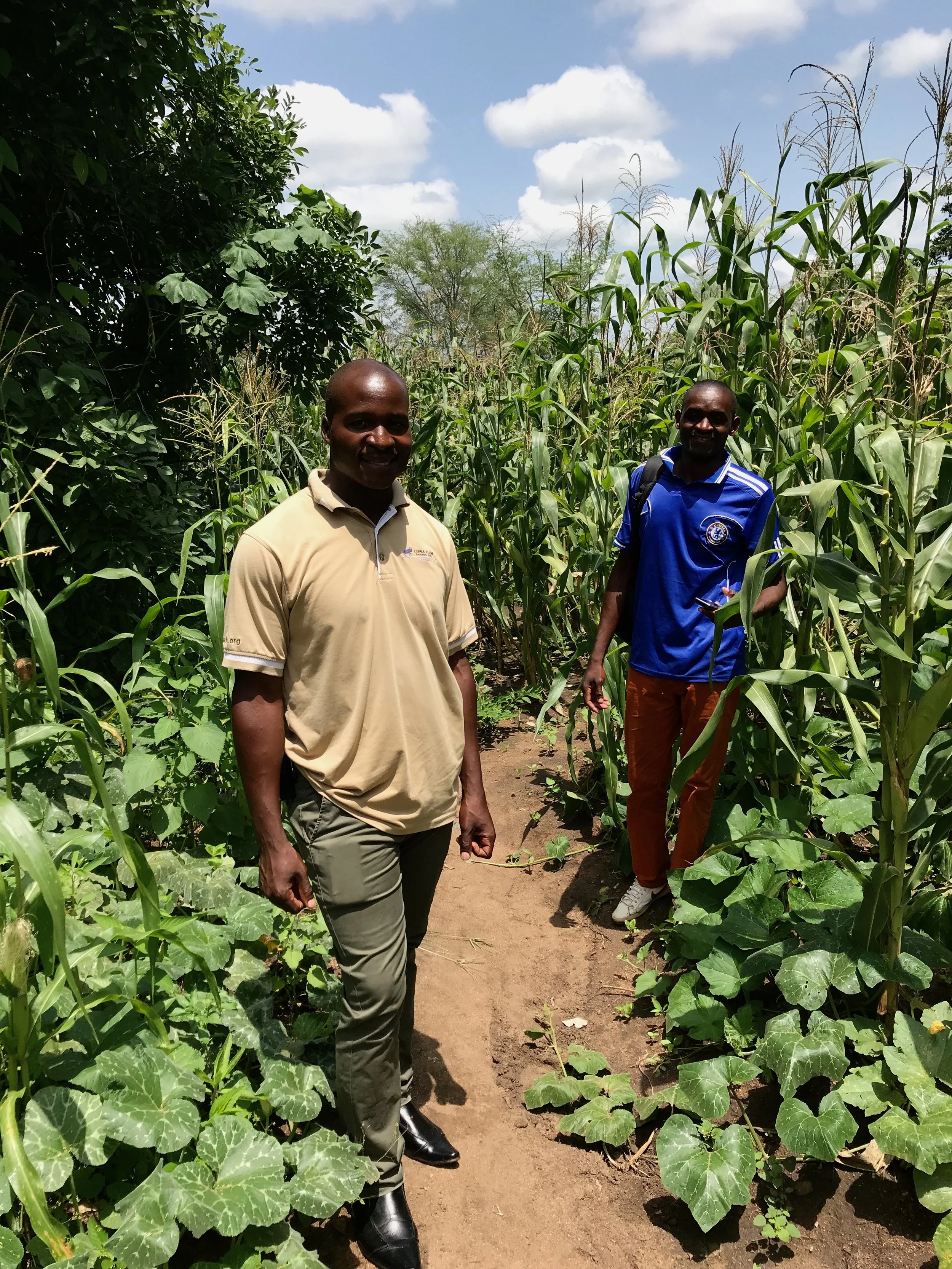
Jason Njobvu, Time & Tide’s executive chef-turned-operations manager, with Moses Sakala on his small-holding.
There is an obvious democracy in food: it’s a terrific social and cultural leveller. It’s an icebreaker among strangers. It’s a unifier among disparate groups. It’s what provides me with the best part of what I do. Food allows me to collaborate with Zambia: its native people, its native plants, its terroir. I am learning daily from the people with whom I collaborate, while I am teaching them how to refashion their traditional and wild ingredients into a contemporary Zambian cuisine.
By working alongside progressive companies, whose bedrock philosophy is to engage with the communities in which they operate, I'm not only privileged to build on that philosophy through the medium of food, but I am privileged to build on the food narrative of Zambia for those visitors who travel to stay in these companies’ camps and lodges.
My hope is that the Zambian food narrative, so rich because of the nation’s diversity, is not lost. I have seen how many young affluent Zambians are unaware of the bounty rendered from the rural fields and bush, shopping, as so many of them do, in Western-style grocery stores rather than in the traditional markets. By choosing the market over the grocery store, not only is one choosing undomesticated produce — trending today in all the top food destinations around the world — but one is uplifting and enriching the lives of those fellow Zambians who work really hard foraging or growing the food.
The food stories shouldn’t be lost either. As Virginian farmer and author, Joel Salatin, once wrote: “This magical, marvellous food on our plate, this sustenance we absorb, has a story to tell. It has a journey. It leaves a footprint. It leaves a legacy. ...”