Lusala - a Wild Root That Makes a Killer Vichyssoise

Lusala roots — hairy, weathered, and arthritic-looking, like an old man's fingers — aren’t the most enticing wild edible I have set my eyes on. They are, however, versatile, healthy, and a perfect substitute for potatoes.
Almost all the Zambians I know love eating lusala roots, having been fed them as young children growing up in areas often far from towns, with limited access to regular fresh produce. Aubrey Tilimboi, a chef with whom I worked at The Elephant Café, told me that as children they were warned never to eat lusala raw because it was poisonous. I was flabbergasted.
“As kids we were taught to always be careful of lusala when it had just been dug up ... and that it could only be eaten after it had been boiled.”
Lusala, according to Aubrey, grows on a vine similar to, say, granadillas, or passion fruit. Before the rains, when the earth is dry and lifeless, it's tricky foraging for the roots. “The thin stems of the plant break off easily, and then it's impossible to find,” he said, “but as soon as the rain comes, and the vine grows again, it becomes much easier.”
Aubrey used to forage for the roots with his mother, who would later turn them into a ‘relish’, or stew, made with tomatoes and onions, which they ate alongside nshima, or maizemeal, Zambia’s staple food.
It was Adelina Banda who first introduced me to lusala roots, as she has done with so much of the wild food with which I work. I read in a report that they are loaded with fibre, and contain potassium, iron and copper. According to the report, the fibre and mucilaginous components of lusala roots also function as effective prebiotics, “creating an environment in the digestive tract that is conducive for the reproduction, growth, and function of probiotics.” It was the mucilaginous, or slimy, feel to the root that I initially found off-putting, but I quickly learned that once lusala is boiled this diminishes. When roasted, it goes altogether.
When I awoke with an idea of turning lusala roots into a wild vichyssoise, I didn't consider that their viscosity would work in helping create a silky texture to the soup. The end result of my recipe-testing produced a vichyssoise more refined than if I had used regular spuds. The soup was whiter and silkier, with a flavour that blew us away.
Vichyssoise is traditionally served cold, but this soup will also work well served hot. My preference was to serve it at room temperature, alongside hot chunks of fresh homemade ciabatta bread slathered in butter.
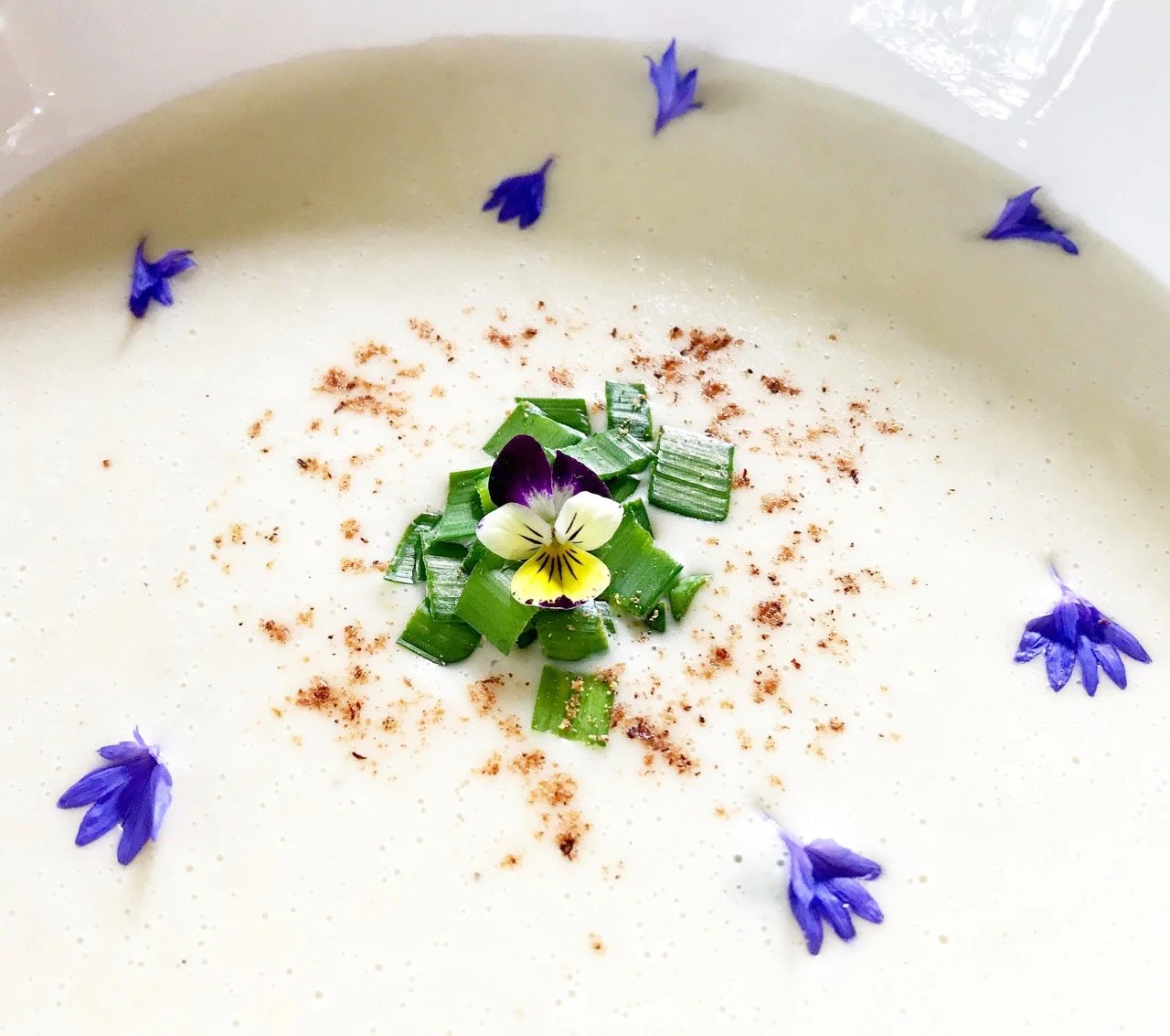
RECIPE
Wild Lusala Vichyssoise
Yield: 6-8 servings
Notes: The flavour of this soup improves over time, therefore prepare a day or two beforehand. Wild lusala vichyssoise can be frozen for later use; just refrain from adding the cream until ready to use.
Ingredients:
large handful lusala roots, peeled and cut into rounds (*substitute with 2-3 medium potatoes)
1 teaspoon salt
4 tablespoons butter
8 large spring onions, white part only, cleaned and thinly sliced (*substitute with 6 medium leeks, if preferred)
2 ½ cups chicken stock
1 bay leaf
2 cups cream
edible flowers (optional)
4 fresh chives, finely chopped
1 pinch nutmeg
salt and ground pepper
Method:
Half-fill a large saucepan with water and bring to the boil over a high heat. Add the salt, stir, and then add the lusala. Cook for about 20 minutes, or until the sliminess of the root is diminished (it will not be removed completely). Drain the lusala from the water using a colander, cover, and set aside.
Return the saucepan to the stovetop over a medium-low heat and melt the butter. When the butter is bubbling slightly, add the spring onions and sweat, making sure they do not brown, about 5 minutes.
Add the lusala and cook for a minute or two, stirring a few times. Stir in the chicken broth and bring to a boil.
Reduce the heat to a simmer, and cook the spring onions and the lusala until they are very soft, about 45 minutes. When done, set aside and allow to cool for a few minutes.
Slowly, in small batches, puree the soup at a high speed in the blender, making sure it’s very smooth.
Return the blended soup to the saucepan and whisk in the cream and nutmeg. Season to taste with salt and pepper. Bring back up to the boil, reduce the heat to a simmer, and cook for another 5 minutes (add more chicken stock if you want a thinner consistency).
Pour the soup through a fine sieve and transfer to a metal mixing bowl. Cool to room temperature, stirring occasionally, and cover the soup by gently pressing a piece of cling-wrap onto its surface before placing it in the refrigerator.
When ready to serve, remove the cling-wrap and ladle the soup into individual bowls. Garnish with edible flowers, chives, and grated nutmeg. Serve hot or cold alongside warm fresh ciabatta bread and butter.